Fresno Fly Fishers For Conservation
Sixty Five Years and Counting...
| | Fly Dope Volume 65 Issue 02 | | | Editor's Note:
Welcome to the February 2026 FFFC Newsletter!
We are continuing to make tweaks to the layout of the newsletter, hopefully you will find them helpful. The few changes in this month's edition are (mostly) cosmetic. We have added a News, Milestones & Achievements section this month. Check it out.
Hopefully, we will have more next month....
Tight Lines!
Mark
|  | | February 2026
Most Goal-Oriented FFFC Members,
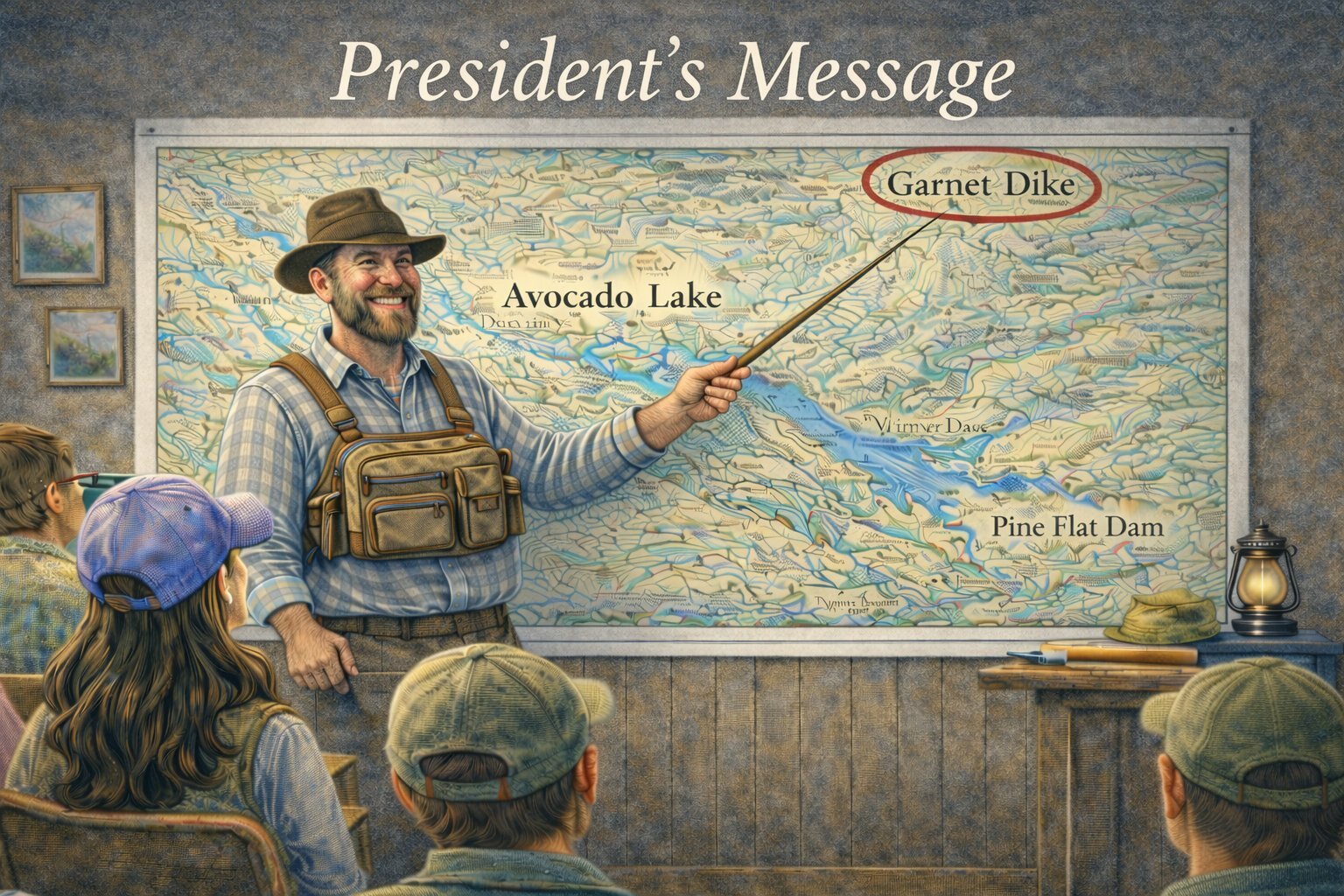
As fly fishers, we often dream of "bucket list" trips to Alaska or Patagonia, but one of the greatest angling challenges in the world is right here in our own backyard. This summer, the Fresno Fly Fishers for Conservation is organizing a special expedition to tackle the California Heritage Trout Challenge.
What is the Heritage Trout Challenge?
The California Department of Fish and Wildlife (CDFW) created this challenge to recognize anglers who catch six different forms of native California trout within their historic ranges. Once you document your catches, the state awards you a personalized, frame-worthy certificate featuring the stunning artwork of Joseph Tomelleri (see photo). | | | Here is a link to a short video where two of our younger members are helped to complete this section of the challenge over a three-day period:
Why this trip?
Most anglers spend years traveling the state to complete this list. However, because of the unique geography of the Kern River drainage, we have the rare opportunity to knock out three of the six required fish in a single trip:
1. The California Golden Trout: Our official State Freshwater Fish. We'll find these vibrant beauties in the high-elevation meadows o the South Fork Kern River drainage.
2. The Little Kern Golden Trout: Endemic only to the Little Kern River and its tributaries, separated from other trout by ancient natural barriers.
3. The Kern River Rainbow: Known for their distinctive "brick-red" lateral-line and heavy spotting, these area the legendary native residents of the main stem of the upper Kern.
The Conservation Connection
This isn't just about the certificate and catching these native trout in their native watershed. By participating, we are supporting the "Heritage" status of these waters. These fish represent the genetic survivors of the Sierra Nevada. Seeing them in their native habitat - many of which were saved from hybridization by the tireless work of conservationists - reminds us why we do what we do.
So, stay tuned for more information about this exciting challenge and outing plan from the event chair, Kevin Smith.
Tight lines,
Christopher Robbins, President and California Heritage Trout Challenge Survivor
| 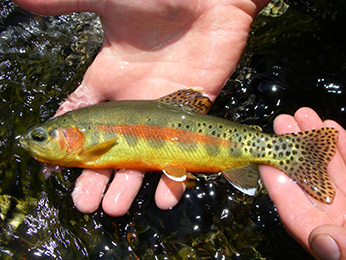 | California Golden Trout |
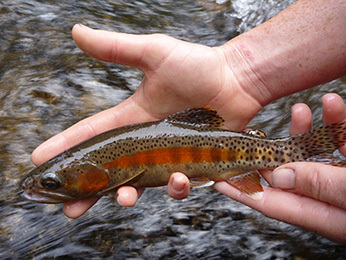 | Little Kern Golden Trout |
|
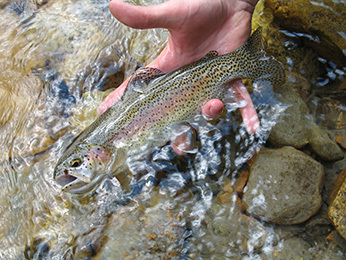 | Kern River Rainbow |
|
Bass on the Fly
February 5th 7PM
Provost & Pritchard Office Building | | This month we have Gil Hassen from the Merced Fly Fishing Club sharing his knowledge of fishing for bass with a fly rod. He grew up bass fishing in rural potholes and small ponds - "little lakes", as he calls them - and early love of warm-water fishing never faded. Here in the Valley we have many ponds and lakes full of bass that often times get overlooked as we single-mindedly pursue trout in streams. Gil's presentation will share the possibilities that still waters represent.
Gil has spent the better part of sixty years with a rod in his hands, and nearly forty-five of those years have been devoted to the art of fly fishing.
Date: February 5, 2026 7PM
| | | | After more than three decades in education, he retired with one goal in mind: to make the most of those long summer breaks by exploring waters across California, with occasional escapes to Idaho and Montana.
He cast his first fly in Idaho behind a beaver dam, armed with an automatic reel and a sense of adventure that never really left. Over the past decade, he's found a new passion in chasing steelhead on the Trinity River and dreams of taking that pursuit farther north - maybe all the way to British Columbia and Alaska. | | | | You also have the option to attend the meeting virtually via Zoom. Zoom information will be available as the meeting date gets closer. You will find the information within the general meeting announcement on the club's main page Here |  |
It is with great pride and gratitude that we announce a very special milestone for four of our dedicated members. This year, we are honoring Brian Loven, Dave Grubbs, Dennis McCullough, and Jeff Manfredo for their 20 years of continuous membership and commitment to the Fresno Fly Fishers for Conservation.
To celebrate two decades of consistent engagement, support, and passion for the sport and our local waters, the club is officially recognizing these individuals as Lifetime Members.
A Legacy of Conservation
For 20 years, these members have been a vital part of our community. Their contributions have helped us fulfill our mission, from protecting our fisheries to mentoring new anglers at events like our Adult Academy. Their presence at the Avocado Lake pavilion and along the banks of the Lower Kings River has served as an inspiration to us all.
Why This Matters
Consistent engagement is the heartbeat of the FFFC. These four individuals have:
-
Supported our conservation efforts through 20 years of annual dues.
-
Shared their expertise and "found skills" with generations of new fly fishers.
-
Demonstrated the true spirit of sportsmanship and environmental stewardship.
Looking Ahead
As Lifetime Members, they will continue to be a cornerstone of our club, and we look forward to many more years of seeing them at our meetings and on the water.
Please join us in thanking them for their incredible loyalty. We think their journey is a testament to the phrase we love to tell new anglers: "Tight Lines!"
Tight Lines!
Christopher Robbins
President |  |
List of Events and Outings
February 5 Club Meeting - Presentation, "Bass on the Fly" Read More
There are still slots available for members and non-members! The Academy is a great way to get family and friends involved in fly fishing and at the same time hook them as a long-term partner who will attend outings and meetings with you.
February 28 - March 1 Lower Yuba River Outing
This is a unique opportunity to fish the University of California managed private waters on the Lower Yuba River below Englebright Dam. This scenic and challenging stretch of the river has a great reputation for strong active rainbows and steelhead. The event is currently sold out. Email Time Ritchey (our host) at tritchey@comcast.net if you are interested in adding your name to the waitlist.
February 27, 28 and March 1 Pleasanton Fly Fishing Show
March 6 - March 7 Upper Kings
Join us for a few days on one of our favorite section of river, the Upper Kings. We have a cabin (Camp4 Campground) for the night of the 6th so plan on coming up early on Friday, do some fishing if you have time, then we'll have a BBQ dinner at the cabin. Saturday morning we'll start out early for a day on the water. The early fly gets the rainbow!
Go Here register early to get space in the cabin and for more information regarding the outing
Go Here to see our full Event Calendar
Return to Table of Contents
| Big Cities = Big Opportunities for Fly Fishing
| | I spent a fair amount of time last summer in the greater Denver area of Colorado. Most of my time was spent hanging out with family and taking day drips, but I did get to wet my fly line most weeks. I took it as a personal mission to visit as many fly shops in the area as possible. I try to do my part to support the local economy as well as gather good intel on possible fishing spots. One option that came up was the South Platte River in Denver. The river literally runs through town. Granted, | | | This is not one of those scenic getaways that Colorado is known for. With a surrounding population of over three million people, it's understandable that the river can suffer its share of indignities: trash, graffiti, industrial pollution, etc. Even with all of the negatives, there are some positives: convenience, large carp and seasonally stocked rainbow trout. I've done a recon mission while out shopping with my wife but have yet to try it out. Something to keep in my back pocket for this summer. | | The Los Angeles River has gotten a fair amount of recent notoriety as a great urban fishery. In fact, Jimmy Kimmel has taken his fly rod out to this glorified flood canal and hooked into some of the local carp that call it home. One of the pioneers of fly fishing the LA River is Lino Jubilado, pictured here. Lino has a very active Instagram page and is well known for introducing fly fishing to many by taking them to his local river. Although designed with flood control as its primary mission, the LA River in may areas | | | has a divers aquatic ecosystem which can support many of the warm water fish we fly anglers often target.
| | Many of you may remember George Revel from when he presented to our club via ZOOM during COVID. He owns the fly shop Lost Coast Outfitters in the heart of the Financial District in San Francisco. George was one of the pioneers of fly fishing for striped bass off the rock jetties and local beaches with a fly rod. Long trips away from his shop ere out of the question on most days. In order to scratch the fly fishing "itch", George began exploring his local waters somewhere close to where he could fish for a couple of hours before and after work. He was successful. The local ocean access points provided him with opportunities to dial in fly patterns, tidal influences and the seasonality of different locations. George has not kept what he learned a secret. Many anglers now find fishing for these hard fighting inshore bass to a fun challenge. | | | | Here we have Kern River guide Guy Jeans fishing with George Revel in the surf for striped bass. Jeans has produced a number of recent videos showcasing some of the West's most unique fisheries. His most recent film is all about fly fishing in the San Francisco Bay area. It will give the viewer insight into this fishery in a way that only a film can do. | | | |
I have only scratched the surface on this urban fisheries topic. I have left off a number of fishable rivers that run through cities. Our own Jim Clark has had great success fishing on the Boise River running through Boise Idaho. There is also the American River in Sacramento that holds trout, shad and steelhead. I would be remiss if I didn't mention the Truckee River which runs through Reno Nevada. The Truckee is home to huge brown and rainbow trout. So, the next time you go out fly fishing, don't limit yourself to high mountain streams, maybe look a little closer to home.
| Back of Beyond Stephen Neal
In Wildness is the Preservation of the World - “Henry David Thoreau."
|  | Heavy languid raindrops fell from clouds closer to the earth than the sky. The distance from raindrop formation to splat measures in tens of feet, not the usual hundreds or thousands. Western Hemlock, Cedar, Douglas Fir, Red Alder, and Big Leaf Maple trees huddled together under the low-lying clouds, appearing more as wraiths than solid timber. Lichen and moss swell up like a withered sponge on a drinking spree. The western slope of the Cascades is a moisture-rich environment.
The eastern side of the mountains sings a different tune. As a child of California’s Central San Joaquin Valley, I was more familiar with the drier of the two tunes. Our winter’s clay-bottomed mud puddles became fine face powder dust in the century temperatures of summer. Tumbleweed snowmen were stand-ins for the real thing in our arid, snowless yards. Our Tule ground fog was cold and notorious for its lethal driving conditions. Painted primer-coated-gray used Dodge Chargers were hunting sharks in our sea of the gray, ground hugging opacity. Tule fog was bone-chillingly cold, made driving treacherous, yet was moisture-light compared to Pacific Northwest fog/rain. In brewers’ terms it’s like comparing Miller Lite to Genesis Stout. PNW fog is a full -bodied brew.
I grew up dreaming of evergreen forests and wooded landscapes. Good luck and family needs eventually transported me to that youthful dream. This immersion in the land of sea and mountains was my dream come true. In time my vision of living in an evergreen forest landscape would open a deeper appreciation for the geological history of our planet. It would be enhanced through fishing trips east of the Cascade Mountains to the interior of Washington State.
Let me regress briefly. I have lived and traveled extensively in the arid Western United States and have always been in awe of its beauty but had thought little of its geological history. My sojourns east of the Cascades have opened a deep adoration of our home, our earth.
From my base in the Puget Sound region it is a ninety-minute drive across the Cascade Mountain Range to the Columbia Basin. Upon leaving the Cascade Mountain’s river canyons via Interstate 90, the vegetation change is dramatic. Abruptly the evergreens give way | | dramatic. Abruptly the evergreens give way to grass and sagebrush as the land slopes towards the Columbia River Gorge. The land here is dryer, as it lies in the rain shadow of the Cascades. These mountains are greedy, scraping most of the moisture from the passing storms, leaving little water for the land beyond its crests.
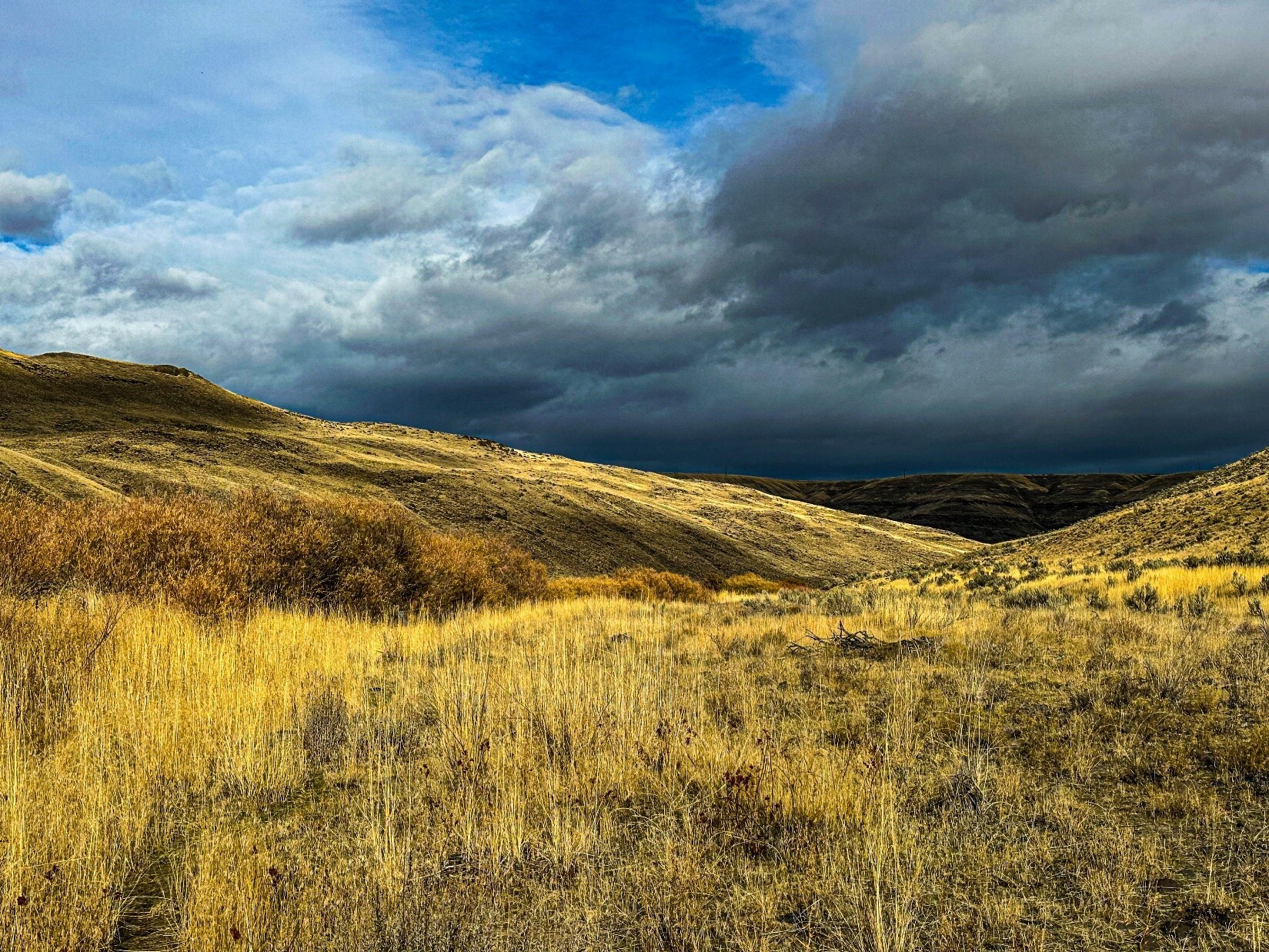
Temperatures in this rain-starved land reach into the hundreds in summer. Heated air rising in radiating waves off a tin roof is a common sight. In winter freezing temperatures are the norm, often resulting in | | | Lake Lenice parking lot looking southwest
widespread fish kills due to extended freeze-ups, which deprive the lakes of the oxygen that fish require. Many are the years that I have returned to a favorite eastside lake to find the results of what we fishermen call “winter-kill.”
The Columbia River Gorge funnels wind up and down its length year-round, as do all the river canyons in the basin. On the Columbia River, powerful downstream afternoon summer winds are the norm. Waders suspended from clothesline to dry often hang horizontally due to the strong downstream winds. On upper elevation lakes morning upstream winds are followed by afternoon downstream winds. Fisherman on lakes and rivers need to be weather-aware and pay attention. If not fully secured and staked down, campsites can and will be sites of mayhem. Trailer awnings, tarps, pop-up canopies, and tents face the threat of strong winds and microbursts that shred, bend, and launch what was thought to be secure. On one particular river trip on Oregon’s Deschutes River I was forced to jump into our wall tent, using my full body weight to keep it from vacating our campsite with our clothing, gear bags, sleeping bags, and cots.
Beyond the obvious (temperatures, wind, dry land, sagebrush, rocks, rivers and vast expanse of earth and sky) lays the earth’s geological history written in its sculped topography. Internet research reveals a wealth of pertinent information that is imprinted upon the landscape of Central Washington.
Let’s travel back in time, adjust our goggles, strap on our adventure wings, and let ourselves soar. We are going to take an eagle’s view of the geological history of Washington. We will start at the beginning, as all good adventure stories should. Between 700 million and 1.5 billion years ago the silt that would eventually become Washington, Alberta, British Columbia, Montana and Idaho was laid down within the supercontinent of Rodinia (Russian for” home”). Over time that silt became multicolored sandstone, siltstone, and limestone, which in turn became what geologists call Belt Rock (named after a town in Montana). This Belt Rock can be found exposed in the eastern Okanogan Highlands and on prominent display in Montana. It makes up most of the spectacular mountains in Glacier National Park. 700 million years ago Rodinia began to break apart. Earth’s internal heat was transferred toward the cold of space, obeying the basic law of thermodynamics. With that transfer of heat a huge fragment broke off, so huge that it was to eventually become Washington, Alberta, | | British Columbia, Montana, and Idaho. This landmass came to be called the Laurentia Continent.
The Laurentia Continent’s shoreline began just west of present-day Spokane, Washington. From our lofty perspective we notice that there is nothing but ocean to the west. And so it shall be for the next 400 million years a very geologically peaceful place. But that pesky devil thermodynamics was just waiting to make its next move, and something had to give. But it wasn’t the Laurentia Continent; western | | | Lake Lenice parking lot looking West
Washington still needed to be built, and its time had finally come.
The Laurentia Continent became the subduction
zone, and a major tectonic phase of western Washington’s geological history began. Ocean plates began to move eastward beneath the Laurentia Continent. This and submerged volcanic activity started building archipelagos. These island groups stacked up against the Laurentia Continent. Washington’s coastline moved west in stages starting 350 million years ago and lasting for 250 million years.
But the earth is not still, and thermodynamics changed the equation again.
About 55 million years ago a series of volcanic eruptions covered the islands that had ground into the continent during the land-building phase of Washington’s westward expansion. Basalt flows buried the island remnants thousands of feet deep. The last major basalt flow (the Columbia Basalt Flow) happened somewhere from 17 to 6 million years ago, creating the Columbia Basin.
Earth explorers, now is a good time to clean your goggles, as things are about to change rapidly. The Ice Age is ending and a lot of water that has been trapped behind ice dams is going to be released. That huge inland sea is called Glacial Lake Missoula. Eastern Washington is going to be ground zero for at least forty catastrophic floods and at least 60 more major inundation. Each flood event occurred roughly every 50 years. In mere days these torrents emptied a lake half the size of present-day Lake Michigan.
The floodwaters completely reformed the landscape on a colossal scale. The water’s power sucked giant sections out of the basalt, created flattened mesas and giant potholes, and formed ripple marks between 15 and 30 feet tall. This radically reformed landscape is now called the Channeled Scablands. Besides the mesas, potholes, and ripple marks the floods also left behind many other distinctive features such as buttes, coulees, erratics, and flood bars. During the catastrophic floods, Dry Falls was an active waterfall over 400 feet high and 3.5 miles wide, dwarfing Niagara Falls.
Ok, let’s relax from our time travel and drop back to terra firma. We can shed our wings and remove our goggles. It is time to look at what’s right in front of all of us, our majestic and marvelous world. We often take it for granted, but it’s where we live, and it supports our weight when we walk upon it. We seldom give it the respect it deserves; just like us, it lives and breathes, it rages and relaxes. It changes shape, grows, and diminishes. Like us, our earth is a thread in the web of life.
My fishing trips east of the Cascades revealed a landscape that fed my curiosity. The discovery of the floods sparked new discoveries. How amazing is it that western Washington is a conglomeration of volcanic islands that migrated east to crash into a continent to build a state! And to think this now arid landscape was sculpted by water!
Man did not create the web of life. Mankind is a mere thread in that web, and everything we touch affects everything else in the web of life. Celebrate our planet earth, our home; it is a wonderous part of the web of life. Always stay curious. Step out your door and truly live!
| |
A Big Thank You, to Tennis Terrance for his editing suggestions.
“The world is out there, the journey starts the minute you leave the door, go outside and truly live.” – S. Neal
“When given the choice between being right or being kind, choose kind – Dr. Wayne W. Dyer
“Many go fishing all their lives, without knowing that it is not fish they are after” - Henry David Thoreau
| 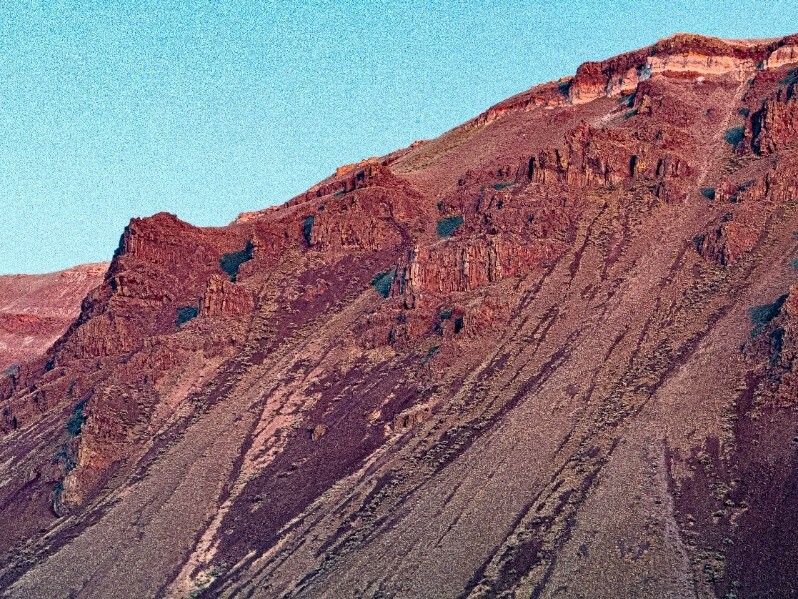 | | Lake Lenice looking west close up |
|
|
|
California Fly Fisher Magazine discount benefit for our members!
|
|
Big News! A new benefit for our club members!
We are thrilled to cast this announcement your way - our club has netted a discount to California Fly Fisher magazine.
The magazine presents itself as California's only dedicated fly fishing publication. Some of our members subscribe to the magazine and praise the quality of the articles and writers as well as it's focus on California fisheries.
If you check it out and decide to subscribe, use code FLYCLUB to receive a $5 discount on a subscription.
|
|
Here's a link to the magazine:
|
|
|
Here are a few additional links to other information and websites you might find useful:
|  | ABOUT US
We are a Fly Fishers International affiliated club, a national organization whose goal, like ours, is to promote the wonderful sport of fly-fishing as well as protect our natural resources. We promote catch and release, education, conservation, and above all, encourage and help those who desire to learn more about all aspects of fly-fishing.
Fly Fishers for Conservation (FFFC) was organized in 1961 by a group of devoted fly fishers deeply concerned with the preservation of trout and all game fish, their environment, and the quality of fishing. Our club has maintained two goals since that time: To foster and promote the sport of angling with artificial flies. To protect, conserve and increase our angling resources.
Go Here if you would like to join our club!
Fly Fishers for Conservation is a 501(c)3 tax-exempt non-profit organization. This means you can use your contribution as a tax deduction. The club gets revenue from member-ship dues and the annual fundraiser dinner. We try to contribute to conservation issues in the area and to our youth with our Trout in the Classroom program, the No Child Left Inside program and by holding a Youth Fly-Fishing Academy annually. The club is al-ways in need of funds. Please consider donating. You may send a check to Fly Fishers for Conservation at PO Box 1192, Clovis, CA 93613. Your donations will be greatly appreciated and they will help the club fulfill its obligations.
|  | | Support received from the following.... | |